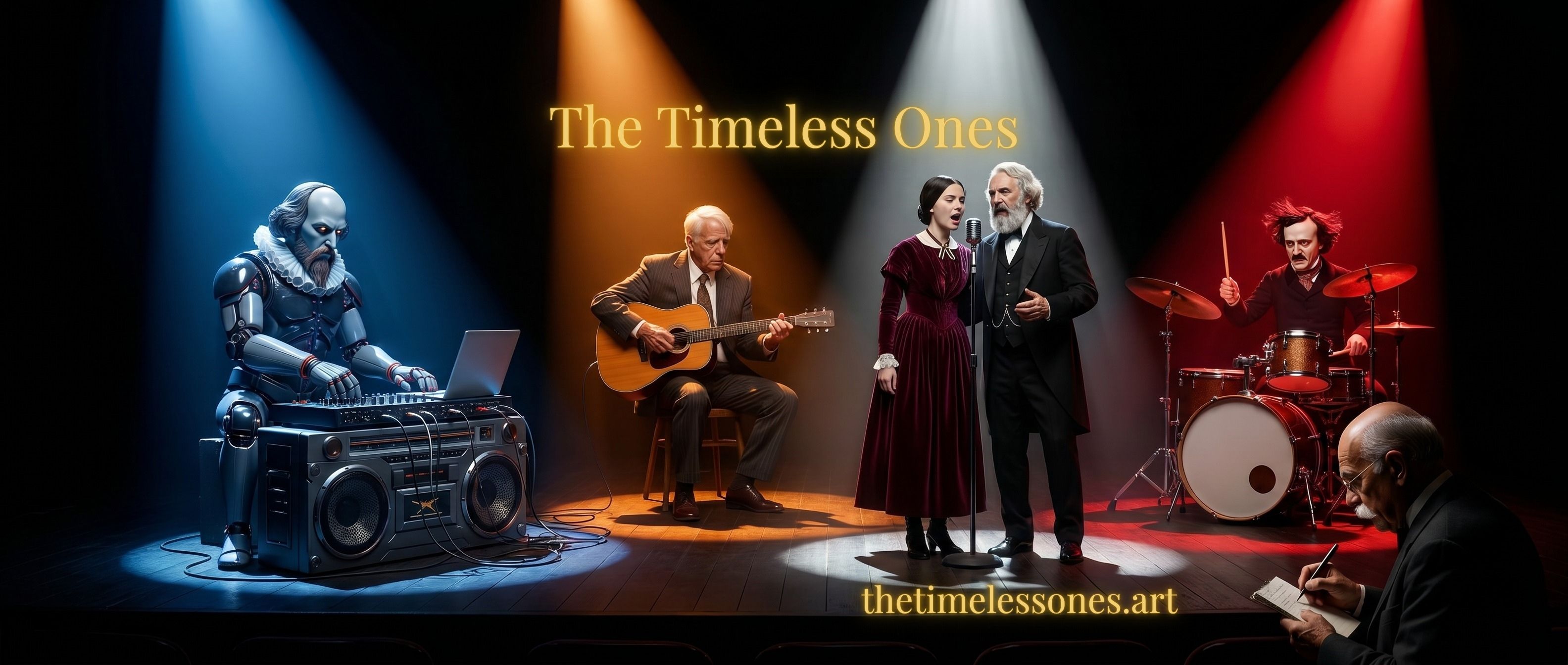
A little over a year ago I started explaining to a few friends and family an activity that had been consuming most of my waking hours. When I put Rudyard Kipling’s “The Gods of the Copybook Headings” into Suno and asked for the rap song I had always wanted, something clicked. I went through more of my favorite poetry and liked the results so much I considered putting the tracks on Spotify just so I could listen across devices. Then a few friends asked if they could listen too.
It didn’t take long to realize people had questions. So I took my IT background and built a website. When former colleagues showed interest, the original low-effort site no longer felt good enough. I did what I always do, I iterated.
I had been looking for a meaningful way to use AI, something that would let me hone the skill while creating something I actually enjoyed. I started using AI for research, trained models for artwork, and collaborated with general-purpose AIs whenever I hit a wall. I haven’t enjoyed working with technology this much in a long time.
What began as amplifying the emotion of poems I already loved turned into feeling the full weight of words I had never truly heard before. The process felt backwards from everything I was used to. Instead of using words to serve the music, I was using music to reveal the emotion already living in the poets’ language.
It has been one year since I released my first tracks online, and I love making them every bit as much as when I started. To mark the occasion I’m releasing something special I’ve been thinking about since the very first month.
My earliest super-listener (an old college friend) asked if I was going to do more Shakespeare. I looked at the Sonnets early on, but the structure and language left me unsure how to approach them. So I set the idea aside while I worked on poets that felt more accessible. Today I’m finally releasing my first track built from two of Shakespeare’s Sonnets (80 and 86). It’s called “Proud Full Sail.”
Saint Thomas Aquinas called pride the greatest of sins and the parent of all others, yet today it is often treated as a virtue. Shakespeare understood the true weight of pride and how, left unchecked, it leads to self-destruction. While Aquinas could explain the logic, Shakespeare made you feel it. This track is William’s own hard-won explanation of pride, enjoy.

Leave a Reply